
Testosterone is the primary male sex hormone and the biological foundation upon which nearly all anabolic steroids are based. It plays a central role in muscular development, bone density, recovery, libido, metabolism, red blood cell production, and numerous other physiological processes throughout the body.
Unlike synthetic anabolic steroids designed to emphasize specific anabolic or androgenic properties, testosterone itself is naturally produced within the human body. In men, it is synthesized primarily in the testes under regulation from the hypothalamic-pituitary-gonadal axis, while smaller amounts are produced in women and within the adrenal glands.
Because of its profound influence on muscle growth and physical performance, testosterone eventually became deeply associated with bodybuilding, athletics, and performance enhancement throughout the 20th century. At the same time, it also remained one of the most important hormones in modern endocrinology and men’s health medicine.
Today, testosterone occupies a unique position at the intersection of medicine, bodybuilding culture, anti-aging discussions, and hormone optimisation. It is simultaneously a legitimate therapeutic treatment, a controlled anabolic substance, and one of the most culturally recognised hormones in the world.
Understanding testosterone is essential not only for understanding anabolic steroids, but also for understanding the broader relationship between hormones, aging, physical performance, and modern health culture itself.
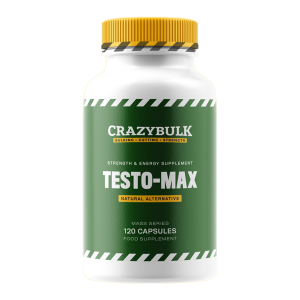
Enhance energy, recovery, and overall performance. Testo-Max is designed for consistent progress and long-term gains.
Table of Contents
- Chemical Structure and Mechanism of Action
- Common Testosterone Esters
- History and Development
- Original Medical Uses
- Testosterone Replacement Therapy (TRT)
- Effects on the Body
- Why Testosterone Became Popular in Bodybuilding
- Pop Culture and Broader Recognition
- Legal Status by Country
- Risks and Side Effects
- Modern Context and Relevance
- Final Thoughts
- FAQs
Chemical Structure and Mechanism of Action
Testosterone is an anabolic-androgenic steroid hormone synthesized from cholesterol through a complex endocrine process involving multiple hormonal signaling pathways.
Once released into the bloodstream, testosterone binds to androgen receptors throughout the body. These receptors influence a wide range of physiological functions involving muscle growth, neurological activity, metabolism, recovery, reproduction, and physical development.
Within skeletal muscle tissue, testosterone increases protein synthesis and nitrogen retention, two critical processes involved in muscular repair and growth. It also contributes to increased red blood cell production, helping improve oxygen delivery and physical performance capacity.
One of testosterone’s defining biochemical characteristics is its ability to convert into two additional hormones:
- Estrogen through the aromatase enzyme
- Dihydrotestosterone (DHT) through the 5-alpha reductase enzyme
These pathways significantly influence how testosterone affects the body.
Estrogen conversion contributes to functions involving bone density, cardiovascular health, hormonal balance, and fluid regulation. Excessive aromatisation, however, may also contribute to water retention and estrogen-related side effects.
DHT conversion contributes more heavily to androgenic characteristics such as facial hair growth, scalp hair loss in genetically susceptible individuals, prostate activity, and sebaceous gland stimulation.
Because testosterone interacts with so many interconnected hormonal systems simultaneously, its physiological effects extend far beyond muscle growth alone.
Common Testosterone Esters
Pharmaceutical testosterone exists in several esterified forms, each designed to influence how quickly the hormone is released into the bloodstream and how long it remains active in the body.
Testosterone Enanthate
One of the most widely prescribed and commonly discussed forms of testosterone. It has a relatively long half-life and is frequently used in both TRT and bodybuilding environments.
Testosterone Cypionate
Very similar to enanthate in both structure and release profile. Testosterone cypionate is especially common in the United States for TRT treatment.
Testosterone Propionate
A shorter-acting ester requiring more frequent administration. It became historically associated with earlier bodybuilding and athletic environments before longer esters became more dominant.
Testosterone Undecanoate
A much longer-acting formulation used in certain medical TRT protocols designed to reduce injection frequency over extended periods.
Although these esters alter release speed and duration, the active hormone itself remains testosterone.
History and Development
The scientific understanding of testosterone accelerated dramatically during the early 20th century. Although researchers had long suspected the existence of male hormones responsible for muscularity, reproduction, and masculine characteristics, testosterone itself was not successfully isolated and synthesized until the 1930s.
Breakthroughs by researchers Adolf Butenandt and Leopold Ruzicka eventually led to the successful synthesis of testosterone, work that transformed the future of endocrinology and hormone research.
Once synthetic testosterone became available, physicians quickly began exploring its therapeutic applications in situations involving hormonal deficiency, delayed puberty, muscle wasting, and physical recovery.
At the same time, researchers also started modifying testosterone chemically in an effort to separate anabolic effects from androgenic side effects. These experiments eventually led to the development of numerous anabolic steroids, including compounds such as Dianabol, Deca Durabolin, and Anavar.
By the 1950s and 1960s, testosterone had become increasingly associated with strength sports and athletic performance enhancement. Reports that Soviet athletes were using testosterone for Olympic performance contributed to growing interest in anabolic hormones within American athletics and bodybuilding.
As bodybuilding culture expanded during the 1960s and 1970s, testosterone became foundational to modern performance-enhancement culture. Unlike many synthetic anabolic steroids developed later, however, testosterone retained widespread medical legitimacy throughout this entire period.
Its role eventually expanded beyond endocrinology into broader discussions involving aging, vitality, men’s health, and hormone optimisation.
Original Medical Uses
Testosterone was developed primarily for hormone replacement and endocrine therapy.
Historically, testosterone treatment was prescribed for conditions involving:
- Male hypogonadism
- Delayed puberty
- Hormonal deficiencies
- Muscle-wasting conditions
- Recovery-related tissue deterioration
- Certain forms of anemia
Because testosterone is a naturally occurring hormone rather than a purely synthetic anabolic compound, its medical applications became far broader than many anabolic steroids developed later.
Over time, testosterone therapy evolved into one of the most widely prescribed hormonal treatments in modern medicine, particularly within endocrinology and men’s health.
Testosterone Replacement Therapy (TRT)
Testosterone Replacement Therapy, commonly referred to as TRT, is the medical practice of restoring testosterone levels in individuals with clinically low hormone production.
Interest in TRT increased substantially during the late 2000s and 2010s as awareness surrounding hormone health, aging, and men’s wellness became more mainstream. Symptoms associated with low testosterone may include fatigue, impaired recovery, reduced libido, low mood, muscle loss, reduced bone density, and cognitive changes.
Proper diagnosis, however, requires blood testing and clinical evaluation rather than symptom assessment alone.
Modern TRT programs generally aim to restore testosterone levels into a normal physiological range rather than pushing hormone levels into the supraphysiological ranges associated with bodybuilding and performance enhancement.
Treatment methods may include:
- Injectable testosterone esters
- Topical gels and creams
- Patches
- Long-acting injectable formulations
As TRT clinics and hormone optimisation centers became more common, testosterone also became increasingly connected to anti-aging culture and “optimization” discussions.
This overlap contributed to ongoing debate surrounding the distinction between legitimate hormone replacement therapy and enhancement-focused use. Critics argue that some clinics market testosterone aggressively as a lifestyle treatment rather than strictly as a therapy for medically diagnosed endocrine dysfunction.
Despite these debates, TRT remains a legitimate and medically recognised treatment when prescribed appropriately for clinically verified testosterone deficiency.
Effects on the Body
Testosterone influences nearly every major physiological system within the body.
Its anabolic and androgenic effects contribute to:
- Increased muscle protein synthesis
- Improved recovery capacity
- Enhanced nitrogen retention
- Increased red blood cell production
- Bone density maintenance
- Libido and reproductive function
- Mood and cognitive performance
Unlike highly specialized anabolic steroids designed to emphasize one particular outcome, testosterone exerts broad systemic effects due to its foundational role in endocrine physiology.
Because testosterone converts into both estrogen and DHT, its effects are closely tied to multiple hormonal pathways simultaneously. This broad-spectrum influence is one of the reasons testosterone remains foundational to both medicine and performance enhancement culture.
Why Testosterone Became Popular in Bodybuilding
Testosterone became central to bodybuilding because it is the primary anabolic hormone responsible for muscular development itself.
As resistance training and physique culture evolved throughout the mid-20th century, athletes increasingly recognized testosterone’s influence on recovery, training intensity, muscle growth, and physical performance.
Unlike many synthetic anabolic compounds developed later, testosterone provides balanced anabolic and androgenic effects that closely mirror the body’s natural hormonal environment.
Throughout bodybuilding history, testosterone became associated with:
- Increased training capacity
- Improved recovery between workouts
- Greater muscular development
- Strength progression
- Long-term anabolic support
Even after the emergence of countless synthetic anabolic steroids, testosterone remained foundational within bodybuilding because virtually every anabolic compound is ultimately compared against testosterone itself.
Its role within performance enhancement is so central that the entire anabolic steroid category effectively traces back to testosterone.
Pop Culture and Broader Recognition
Few hormones possess the broader cultural recognition of testosterone.
Beyond bodybuilding and athletics, testosterone became strongly associated with masculinity, vitality, competitiveness, physical development, and aging throughout modern culture.
During the rise of internet fitness culture and men’s health media throughout the 2000s and 2010s, TRT and testosterone optimisation became increasingly mainstream topics. Conversations surrounding “low testosterone,” biohacking, anti-aging medicine, and men’s wellness helped push testosterone discussions far beyond traditional medical environments.
At the same time, testosterone remained central to anti-doping discussions in professional sports because of its powerful influence on recovery and athletic performance.
Its medical legitimacy combined with its athletic significance created a cultural position unlike virtually any other anabolic compound.
Legal Status by Country
Despite its legitimate medical importance, testosterone is heavily regulated internationally due to its anabolic and performance-enhancing properties.
United States
In the United States, testosterone is classified as a Schedule III controlled substance under federal law. It is legal only through prescription for approved medical purposes such as hypogonadism or testosterone deficiency.
Possession or distribution without prescription is illegal.
United Kingdom
In the United Kingdom, testosterone falls under Class C controlled substances legislation. Prescription-based medical use is permitted, while unauthorised distribution and trafficking are prohibited.
Canada
Canada regulates testosterone under controlled substances laws while permitting prescription-based therapeutic use.
Australia
Australia maintains strict anabolic steroid regulations, including substantial restrictions on possession and importation without medical authorisation.
Across most European countries and many other regions, testosterone remains prescription-only due to its classification as an anabolic steroid hormone.
Risks and Side Effects
Although testosterone is naturally produced within the human body, external testosterone administration can still produce substantial physiological effects and risks.
Like other anabolic steroids, exogenous testosterone suppresses natural hormone production through endocrine feedback mechanisms. Long-term suppression may affect fertility and natural hormonal recovery depending on duration and exposure.
Potential concerns associated with testosterone exposure include:
- Cardiovascular strain
- Elevated hematocrit
- Cholesterol imbalance
- Water retention
- Estrogen-related side effects
- Androgenic effects such as acne or hair loss
- Hormonal suppression
Because testosterone converts into both estrogen and DHT, side effects may vary considerably depending on genetics, dosage, metabolism, and overall health status.
Even within medically supervised TRT environments, ongoing monitoring remains important due to testosterone’s influence on multiple physiological systems simultaneously.
Modern Context and Relevance
Today, testosterone occupies a unique position within medicine, bodybuilding culture, anti-aging discussions, and men’s health.
Its role within medically supervised TRT continues to expand as awareness surrounding hormone deficiency and endocrine health increases. At the same time, growing interest in longevity, optimisation, and physical performance has made testosterone one of the most publicly discussed hormones in modern culture.
Within bodybuilding and athletics, testosterone remains foundational despite the development of countless synthetic anabolic compounds over the past several decades.
Its biological importance, historical significance, and ongoing medical relevance make testosterone one of the most influential hormones ever studied in human physiology.
Final Thoughts
Testosterone remains the foundational anabolic hormone underlying both modern endocrinology and the entire anabolic steroid category.
Originally developed for therapeutic hormone replacement and endocrine support, testosterone later became deeply associated with bodybuilding, athletic performance, anti-aging medicine, and modern hormone optimisation culture.
Its influence on muscle growth, recovery, metabolism, libido, bone density, and overall physiological function makes it one of the most biologically important hormones in the human body.
At the same time, testosterone therapy and performance enhancement remain complex topics involving endocrine regulation, cardiovascular health, legality, aging, and long-term systemic considerations.
Understanding testosterone is essential not only for understanding anabolic steroids, but also for understanding the broader relationship between hormones, health, aging, and physical performance itself.
FAQs
Testosterone is the primary male sex hormone responsible for muscle development, recovery, libido, bone density, and many other physiological functions.
Yes. Testosterone is a naturally occurring anabolic-androgenic hormone and the foundational compound from which most anabolic steroids are derived.
TRT stands for Testosterone Replacement Therapy, a medically supervised treatment designed to restore low testosterone levels.
Testosterone supports muscle growth, recovery, training capacity, and anabolic activity, making it foundational within bodybuilding culture.
Yes, but only through prescription for approved medical purposes such as testosterone deficiency or hypogonadism.
Yes. Testosterone can aromatise into estrogen, which influences hormonal balance, fluid retention, and several physiological processes.